
HEADS WILL ROLL: Echoes of an Iron Age mystery hidden in Cumbria’s carved stone heads.
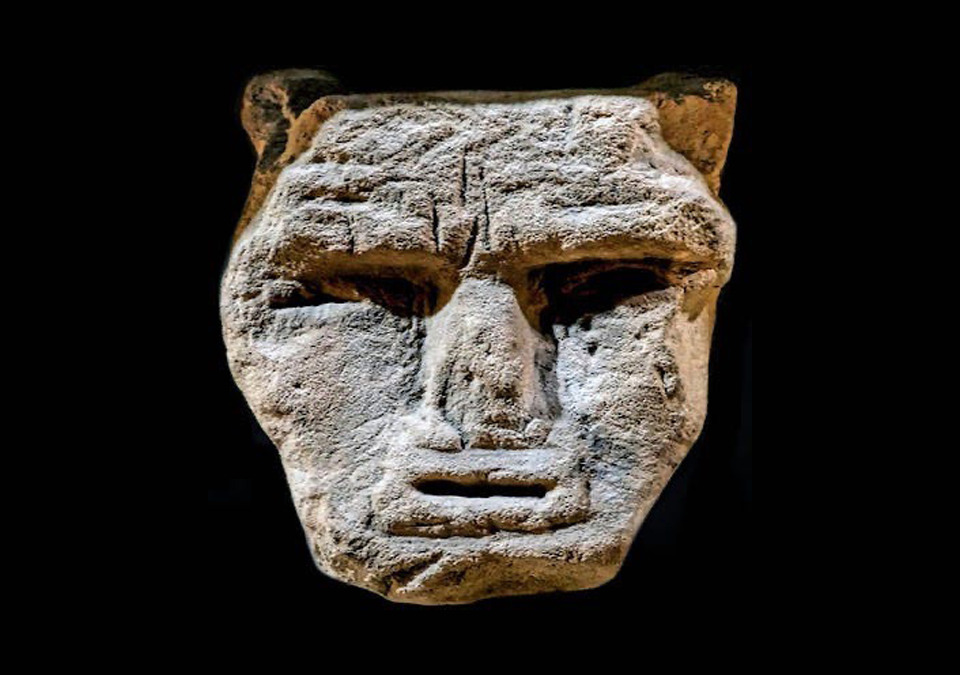
HEADS WILL ROLL
Echoes of an Iron Age mystery hidden in Cumbria’s carved stone heads.
by Paul Eastham
Two thousand sinister carved stone heads have been found in Cumbria and the north.
What on earth are they?
Sceptics argue the sculptures are too crude to have a profound meaning. But Iron Age specialists say the impersonal-looking stone faces show Cumbria was the centre of a prehistoric Celtic “cult of the head”.
Ancient Cumbrian Celts collected and venerated human heads because they saw the head as the seat of the soul and a symbol of divinity. Greek and Roman writers record that, in battle, ancient Celtic warriors across Europe chopped off the heads of their opponents to capture the centre of their enemies’ life, emotion, and spiritual power.
“The heads were designed to be evil-averting symbols, to protect homes, holy places, buildings, and their inhabitants from evil spirits, bad luck, and demons.”
Carlisle was a centre of the head cult. The clue is in the town’s ancient name: Luguvalium. It was named after the pagan Celtic god Lugus who was celebrated at a festival known as Lughnasadh in which worshippers ritually piled heads – real ones – in mounds and used stone substitutes if they ran out of the fresh type.
Celtic fighters fastened captured heads to the necks of their horses and preserved them in chests full of cedar oil to show off as war trophies. One such stone head was found on Roman road near Appleby. Now in the Tullie House museum, Carlisle, dated to 77 AD, it features a Celtic turned-up moustache, close-cropped hair, haunted eyes and a scary, howling mouth.
Critics say the Appleby stone carver was an inept artist who failed to capture individuality. Historians counter that he or she was not carving a real person, but a religious icon that needed to present a chilling, abstract appearance. The heads were designed to be evil-averting symbols, to protect homes, holy places, buildings, and their inhabitants from evil spirits, bad luck, and demons.
One fascinating example is the stone head cemented into the lower part of Norman St Michael’s Church at Brough in Cumbria which suggests the church was previously a Celtic pagan site back into the Iron Age. The head set into the chancel gable of St Mary’s Church in Gilcrux may also be from the cult.
Another example is the harsh and angular so-called ram-horned head found at Netherby near Longtown. Often associated with the pagan deity Cernunnos or the “lord of the wild things”, it has been described by the British Academy as “one of the most expressive pieces of Celtic sculpture found in Britain.”
With its grim, slot-like mouth, resembling a Cyberman from the Dr Who TV series, it was probably made around the time that the Romans conquered the north. This god is often depicted with stag antlers. Around his neck is a torque, a large rigid or stiff neck ring typically made of gold, signifying wealth and nobility in the Ancient Celtic world. The heads are stunning evidence of Cumbria’s deep Celtic past.
This is an extract from a new book, Hidden Cumbrian Histories. You can buy it at The New Bookshop, Main Street, Cockermouth, Bookends in Keswick and Carlisle, along with Sam Read in Grasmere.
Buy online here: www.fletcherchristianbooks.com
If you love our magazines, we can now deliver them directly to your door, ensuring you never miss an issue! Subscribe & Save for a guaranteed 12 months of delivery direct to your door!
Share It:



A lot of fallacies and distortions here. There is absolutely no historical or archaeological evidence that Lughnasadh was celebrated by ritually gathering fresh, severed human heads and piling them into mounds.