Two detectorists came across the find of a lifetime right here in Cumbria.
THERE’S GOLD IN THEM THERE HILLS…
Two detectorists came across the find of a lifetime right here in Cumbria.
by Stephen Murphy
In late May a metal detecting rally took place near Harker, Carlisle. What was discovered is of national importance and can only be described as finds of a lifetime.
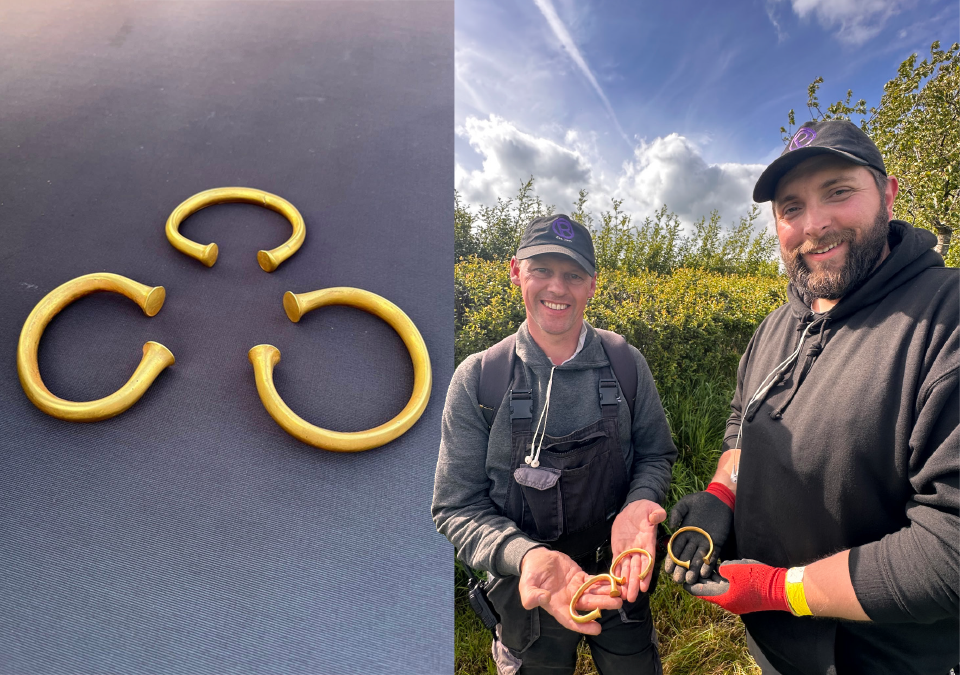
Not one, not two, but three Bronze Age gold torcs (arm bracelets) were uncovered by two Scottish detectorists, Alan Daniels and Andy Crammond, who travelled down the day before, filled with hope but realistically just looking forward to a great weekend.
The treasures unearthed were three Bronze Age gold arm bracelets, likely 2,500 to 3,000 years old, lying just 5 to 6 inches below the surface.
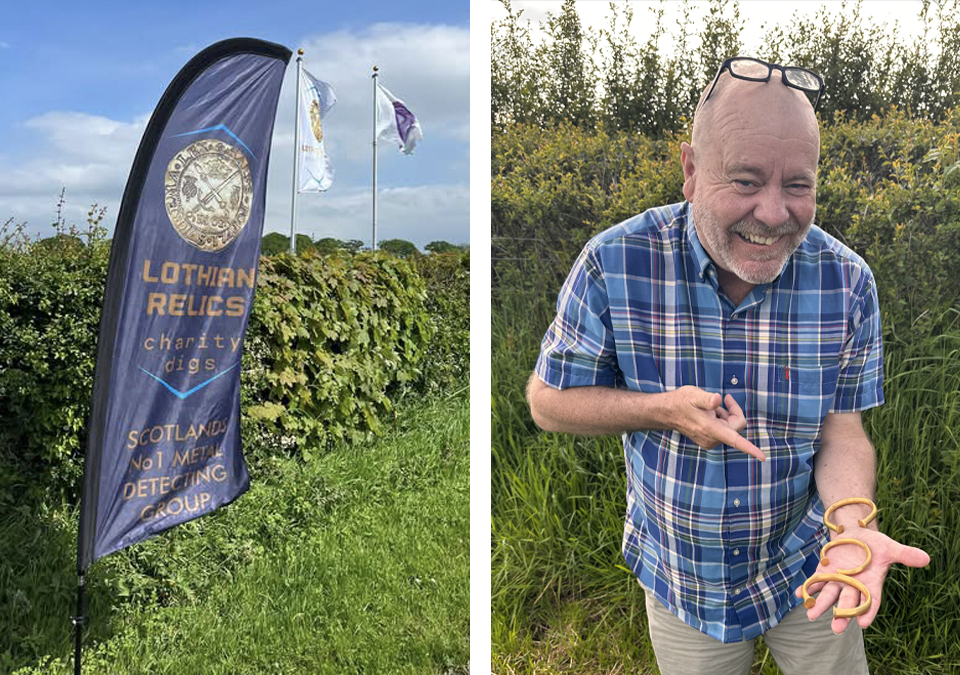
I’ve held these items, and words fail to adequately describe the beauty, majesty, and mystery of these magnificent objects. Whose were they? When were they lost? How were they lost? These questions arise, along with many others.
Regarding how they were lost, I believe, without a doubt, that they were intentionally deposited, perhaps as a ritual or offering. The shallow depth suggests they were not buried for safekeeping; certainly not at only 5 to 6 inches down. However, I cannot fully grasp what the landscape was like 2,500 to 3,000 years ago. Everything is subjective and open to interpretation.
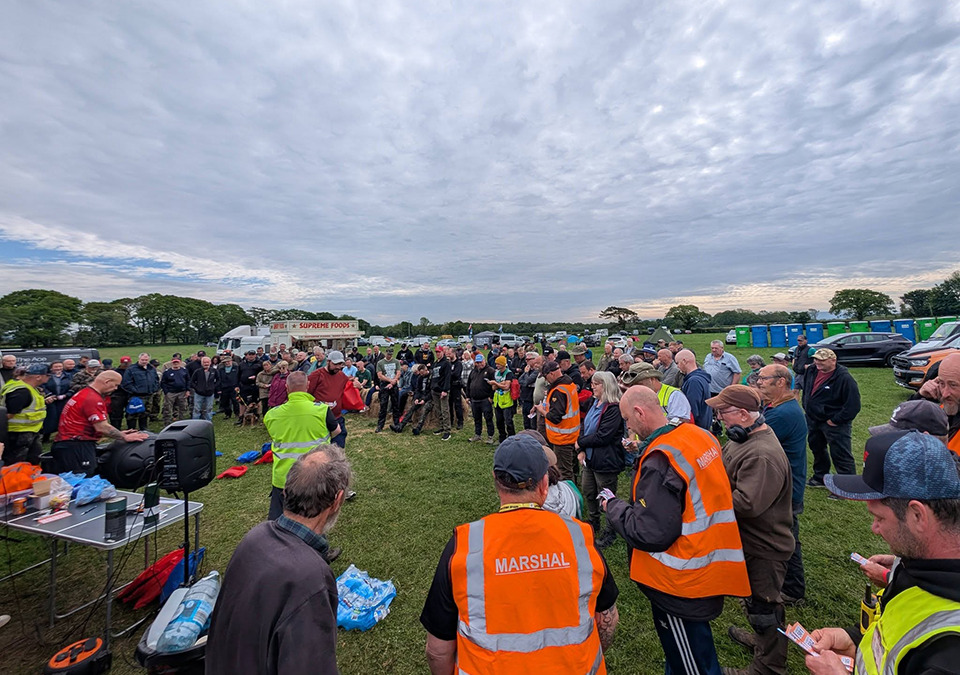
The dig in question was organised by Lothian Relics Metal Detecting, who were invited by Allan Harty of the ‘North Carlisle Against Pylons and Substation’ group to explore the area. The group aims to deter the National Grid from constructing a massive £400 million substation project in the area. Allan stated, “We don’t want it here; the impact would be severe for this area and be detrimental to everyone. This will have a multi-generational effect, pushing some farmers out of what they have done for generations – farming! There are other areas that are more suitable for this project that we hope they will consider.”
He continued, “We invited Lothian Relics to go over the land to understand its heritage value. Did we expect them to find something so nationally significant? Absolutely not. This all points to the area being a ritual landscape, and the bog body found here in the late 1800s may well tie in with the Bronze Age gold torcs discovered. Altogether, these finds indicate that these fields have strong links to the British story dating back to 2,500 to 3,000 BC.”
Detectorists Alan and Andy were ecstatic about their discoveries and plan to return in August when Lothian Relics Metal Detecting Group hosts round two. Alan remarked, “This happens to other people. Usually, we are the ones in the background, watching others find amazing treasures, thinking, ‘I wish that were us, or we walked over that.’”
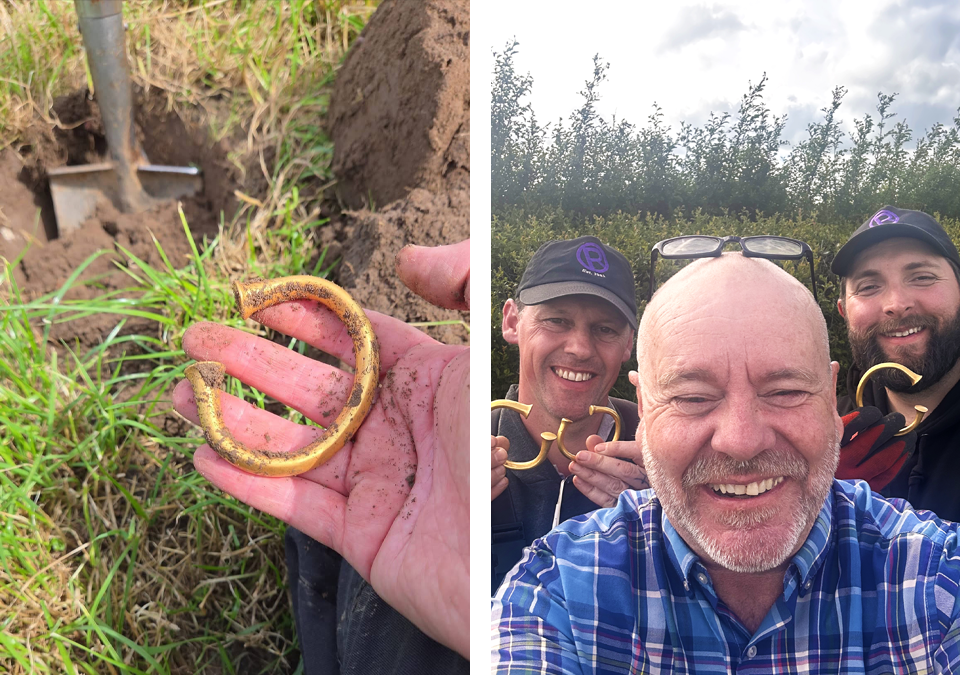
Andy shared, “My initial thought was it’s a bullring, but a millisecond later, I realised it was too shiny and too heavy. Everything became a blur from there. I showed Alan, and we walked back to the hole. We double-checked and, three feet away, found another one, then 10 metres away, the third appeared.”
So, what happens next?
The items are now in the Treasure Trove System, a lengthy process with much to be addressed. The first step involves handing the finds to the relevant authorities – in this case, the Portable Antiquities Scheme. From there, they will be sent to the British Museum, where these incredible finds will be analysed, dated, and recorded, followed by a coroner’s inquiry to determine whether the items will be officially classified as treasure. They will be – without a doubt.
Next is the valuation process, which can be complex. A panel of experts will convene to discuss the appropriate reward. Any proposed reward will be based on similar findings, current market conditions, historical value, and other factors. The financial sum deemed appropriate will then be submitted to the finders and the landowner, at which point the fee can be accepted or disputed.
There are many instances where detectorists have had to negotiate for an extended period until a sensible and fair financial sum is agreed upon. One local Cumbrian detectorist, who discovered a Bronze Age arm bracelet, was initially offered £30,000 as a reward. However, after nearly five years of dispute, a final amount of £100,000 was settled.
Once a price is agreed upon, any museum that declares an interest in acquiring the finds will have to secure the funds to acquire the items, or risk losing them to another institution, likely the British Museum.
In this case, it is certain that Tullie will be at the forefront of efforts to obtain this internationally significant hoard which was found practically in their own backyard – and rightly so. If this is the case, there will likely be fundraising efforts as we strive to keep our history within our community.
Forget valuations; these treasures are, simply put, our treasure – our history – and you can’t put a price tag on that.
Lothian Relics will return in August, dates TBC; www.lothianrelics.com
For more information on ‘North Carlisle Against Pylons and Substation’, join their Facebook group!
If you love our magazines, we can now deliver them directly to your door, ensuring you never miss an issue! Subscribe & Save for a guaranteed 12 months of delivery direct to your door!
Share It: