
KING ARTHUR: The man, the myth, the legend..?
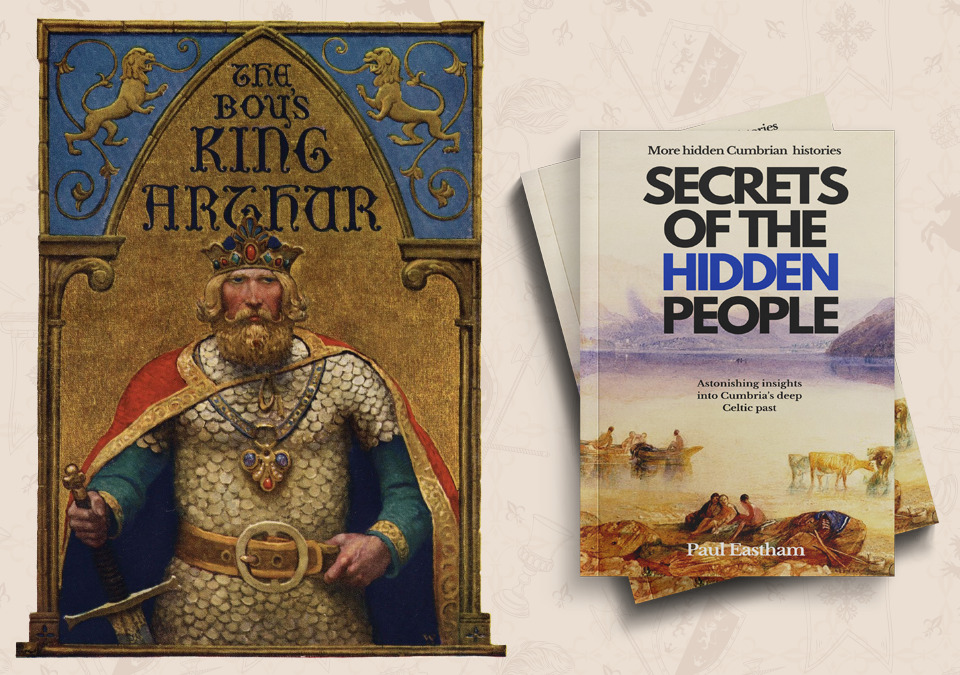
THE MAN, THE MYTH, THE LEGEND?
King Arthur was a northern warrior, new study suggests.
by Paul Eastham
King Arthur was real. He fought and died in Cumbria, academic claims.
Something stunning has happened in British history. Fifty years ago, the academic profession decided the legendary Dark Ages hero King Arthur never lived.
But now Dr Andrew Breeze, a philologist from the University of Navarre in Spain, has made a new analysis of a Latin chronicle called The History Of The Britons, written in the ninth century by the Welsh monk Nennius. It lists a dozen places where Arthur fought battles whose locations nobody knew – until, perhaps, now.
Using philology, the study of how words change their meaning over time, Dr Breeze claims he has pinpointed them all on the map. Breeze says his “startling” finding overturns the traditional story that Arthur was a royal with a magical sword who fought the Anglo-Saxons in the south of England.
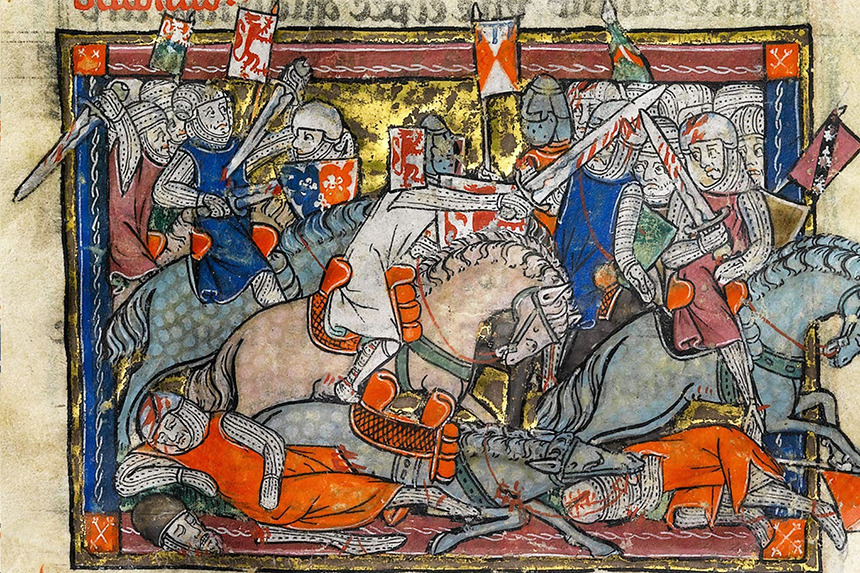
In the new reading, he was a real man, a gritty northern military leader who earned a great reputation fighting in Rheged and the north-east of Britain.
He places eleven of the battles in the Scottish Borders, near the Solway, in Dumfriesshire and Northumberland although he thinks one, at Badon, in Wiltshire, was “not to do with Arthur at all”.
Arthur, he finds, was not a king but a “dux bellorum”, a leader of battles. He did not fight the Anglo-Saxons, but other Celtic Britons (war between northern tribes was endemic in the sixth century). He did this to secure cattle for his starving people after the massive eruption of an Icelandic volcano in 536 AD, whose particles blotted out the sun and caused Cumbrian harvests to fail for years.
Breeze suggests Arthur died between 537 and 539 in a final clash at a fort known to the Romans as Camboglanna on the Cumbrian section of Hadrian’s Wall. Today, the place is called Castlesteads. It is recorded in the Annales Cambriae as the battle of “Camlann.”
After this triumph, Arthur quickly entered Celtic folk myth as a hero who saved his people and died a tragic death.
Later, in the ninth century, when the Anglo-Saxons were trying to colonise Wales, poets seized on Arthur’s story to create a heroic figure to galvanise inhabitants to fight back. Breeze said: “Arthur was not of course a king. He will have been a brave general who soon became a legend.”
Arthur, was thus mythologised into the great defender of the Britons. He becomes a transcendent, Christ-like figure treacherously brought down in a civil war by Mordred, a Judas figure, his treacherous kinsman.
A sceptic might dismiss Breeze’s theory as nothing more than a muddy squabble over cattle raids that is unworthy of one of the greatest myths of all time. But that is to misunderstand the values of sixth century Rheged’s pastoral society where cattle were the most important symbol of wealth and the stood between life and death. A string of victories against Scottish and Pictish raiders against the background of famine and disaster would have earned Arthur high renown.
Secrets of the Hidden People:
www.fletcherchristianbooks.com

If you love our magazines, we can now deliver them directly to your door, ensuring you never miss an issue! Subscribe & Save for a guaranteed 12 months of delivery direct to your door!
Share It:







Paul — you are doing the best job for Cumbria since Wordsworth himself. I thank you sincerely and so will my publisher, Uppsala Books — AB