300 years of Gulliver’s Travels: The Whitehaven connection…
300 years of Gulliver’s Travels
The Whitehaven connection…
by Danni Murphy
Three hundred years ago, Jonathan Swift published a book that would become one of the most famous works of English literature.
Gulliver’s Travels first appeared in 1726, taking readers on extraordinary journeys to lands inhabited by tiny people, giants, flying islands and intelligent horses. But for people in Whitehaven, the story has a much more personal connection.
Long before Swift became famous as the author of Gulliver’s Travels, he spent part of his childhood in the Cumbrian coastal town.
Born in Dublin in 1667, Swift was only around a year old when his Whitehaven nurse took him on a ship to her home town without his mother’s knowledge. She had travelled back because a relative was seriously ill and, according to accounts written by Swift himself, she was so fond of the young child that she could not bear to leave him behind.
Swift remained in Whitehaven for almost three years before returning to Ireland. During his time here, his nurse arranged for him to be taught to read and write, and Swift later recalled that by the age of three he could read parts of the Bible.
It is an extraordinary connection between a Cumbrian town and a literary figure whose work would eventually be read across the world.
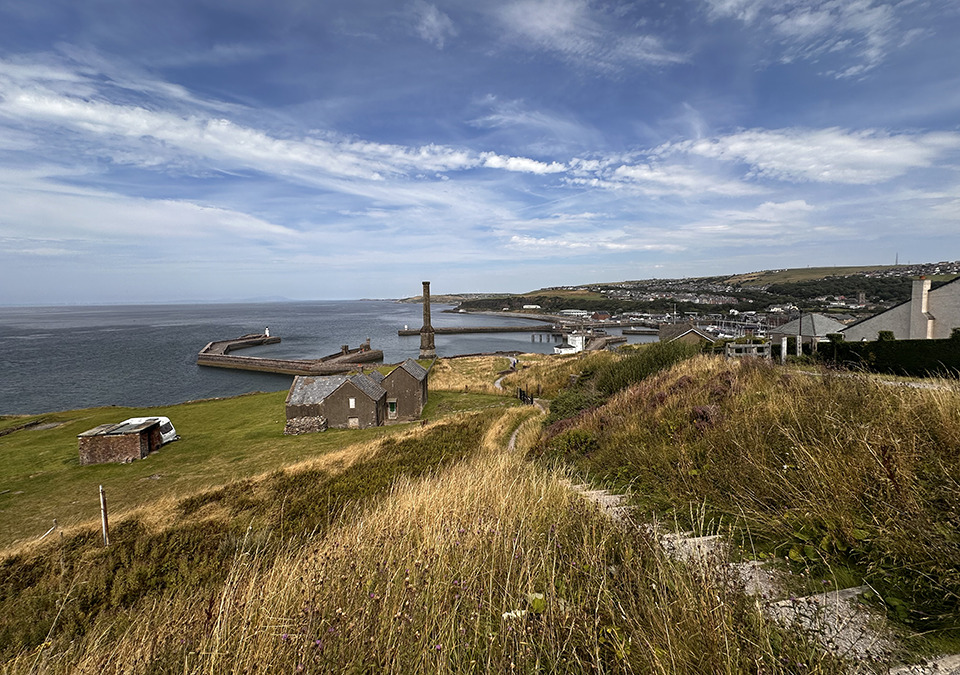
“The elevated views across the town from the hillside around what is now Bowling Green House have been linked to the creation of Lilliput.”
There is also a longstanding local tradition that Swift’s childhood in Whitehaven helped inspire his fictional world. The elevated views across the town from the hillside around what is now Bowling Green House have been linked to the creation of Lilliput, the tiny kingdom where Gulliver famously finds himself among people just six inches tall. The connection has been described in local historical records as a possibility rather than a proven fact, but it has become an enduring part of Whitehaven’s story.
Swift’s strange childhood journey to Whitehaven feels particularly fitting when remembered alongside Gulliver’s Travels. The book itself is built around journeys, unfamiliar places and the idea of seeing the world from a completely different perspective.
Yet Gulliver’s Travels was far more than a fantastical adventure. Swift used imaginary countries and bizarre encounters to satirise politics, society and human behaviour. The novel remains remarkably relevant because beneath the humour and fantasy are questions about power, pride, conflict and what it means to be human.
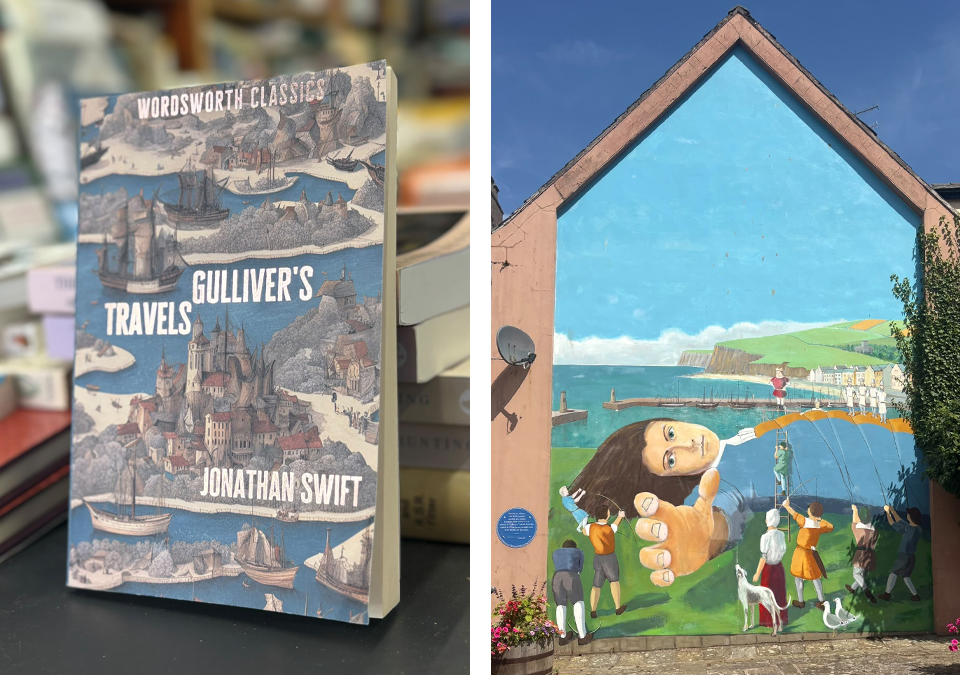
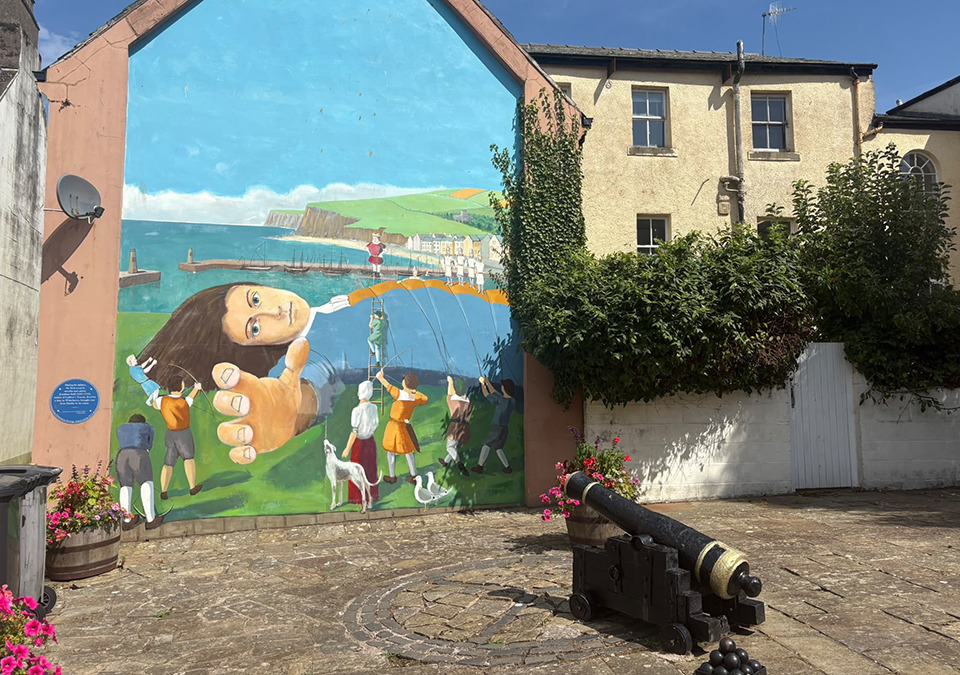
Today, visitors to Whitehaven can still find reminders of this unusual literary connection, including the town’s Gulliver-themed mural.
Three centuries after its first publication, Gulliver’s Travels continues to capture imaginations around the world. And here in Whitehaven, there is an added reason to remember it: one of literature’s most celebrated travellers spent his earliest years looking out across this very town.

If you love our magazines, we can now deliver them directly to your door, ensuring you never miss an issue! Subscribe & Save for a guaranteed 12 months of delivery direct to your door!
Share It: