Wildlife of The Solway Firth [93] The Butterfish (Pholis gunnellus)
Wildlife of The Solway Firth [93]
The Butterfish (Pholis gunnellus)
by Mark Vollers
This small fish (rarely above 20cm) is found on rocky ground from low tide level down to 40m all around the British coast and much of the North Atlantic.
Why the name? Quite possibly because it is extremely slippery should you attempt to handle it!
If you are rock pooling or searching under stones on the beach (these rocks should be carefully replaced as you found them) this is where you are likely to find them. Their ability to breathe air is key to their survival between the tides and they can wriggle away to escape amongst the seaweeds.
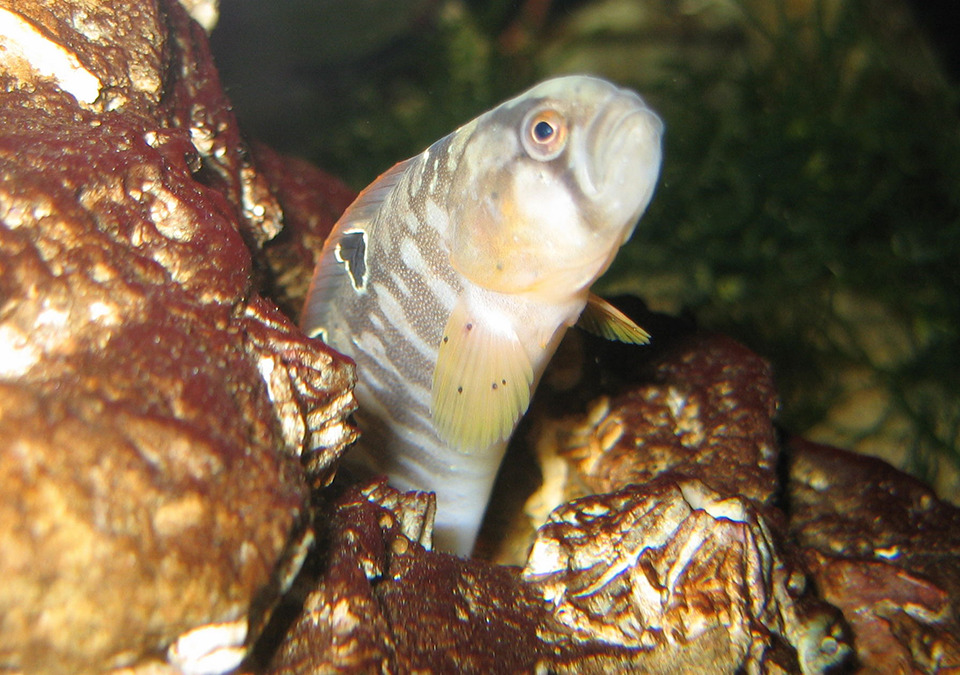
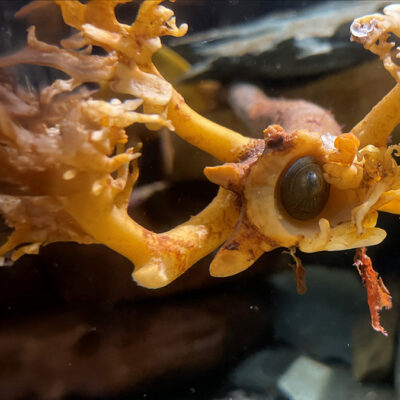
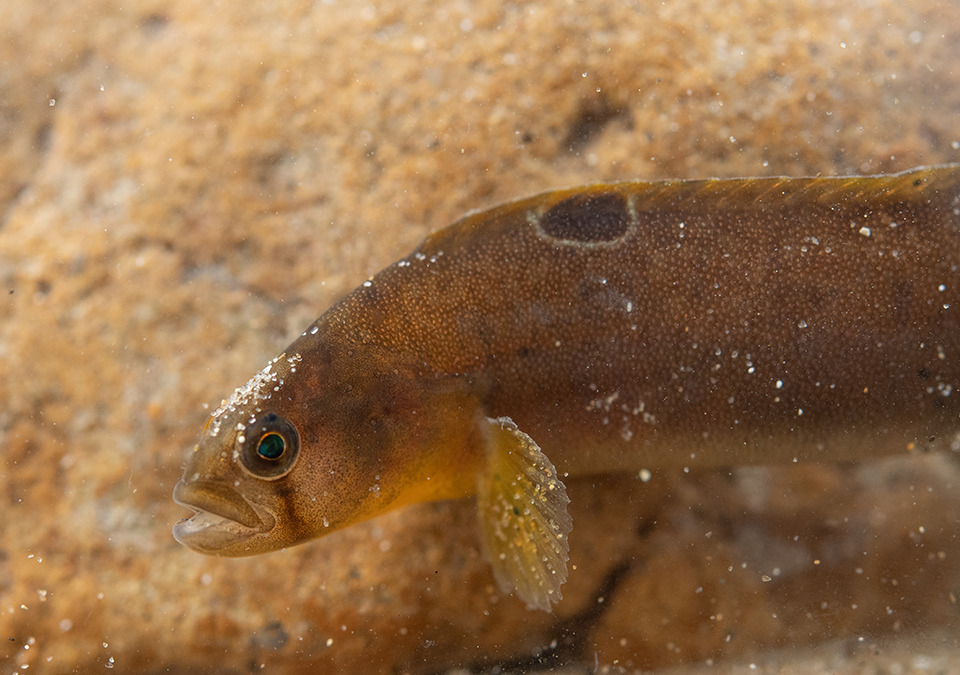
Their long thin body suggests this fish is an eel of sorts, but they are in fact classified as Blennies. They have distinctive white ringed black spots (about 12 in total) running the length of their back, have a colour that varies between yellow to dark brown and a black stripe that runs down its head and through the eye.
“Their ability to breathe air is key to their survival.”
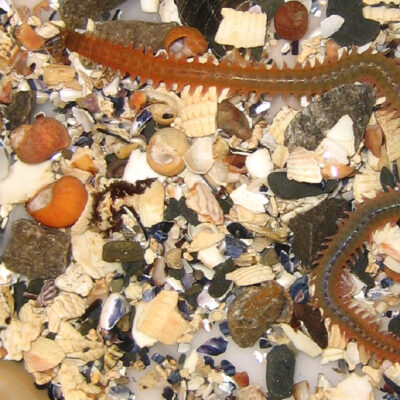
Butterfish or Rock Gunnells have small teeth that enable it to feed on small crustaceans, worms and the eggs of other fish. The female lays between 80-100 eggs in mid-Winter in a large mass on the seabed, often inside an abandoned shell or under a stone and these are closely guarded by either the male or the female until the larvae hatch.
We often have this delightful little fish on display at the aquarium, but due to its secretive nature it is not always easy to find.
Visit the Lake District Coast Aquarium Facebook page to learn more about amazing wildlife on the Solway Coast.

To learn more about what’s happening, follow Cumbria Guide on our social media
Share It: