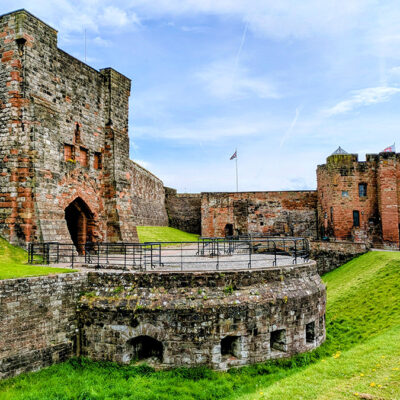
SENHOUSE ROMAN FORT: The historical landmark that tells an important story
SENHOUSE ROMAN FORT, MARYPORT
The historical landmark that tells an important story.
by Jonathan Fraser, Cumbria and the Borders History
Roman Maryport stood roughly in the middle of the Roman coastal defences stretching from Bowness on Solway (24 miles north) to Ravenglass (26 miles south). These forts were built to protect the seaward flank of Hadrian’s Wall, which was under construction.
The defences were made up of milefortlets every roman mile with towers in between. Maryport was linked to Papcastle, Carlisle and possibly Chester by sea- Chester being the Roman legionary base in north-west England.
Alauna Roman Fort was built in 122AD, around the same time that the construction of Hadrian’s Wall began. It was used as a command centre and supply base.
As is usual for Roman forts, there was a vicus outside the fort which included houses, shops, workshops, temples and even a potential hotel. The fort was a typical layout and was the standard ‘playing card’ shape, although slightly squarer than other forts.
The first cohort to occupy the fort was probably Cohors I Hispanorum Equitata. This cohort was a 500 strong, part mounted unit recruited from the Spanish tribes of Roman Spanish provinces. The second auxiliary unit at Maryport was Cohors I Delmatarum, a 500 strong infantry unit of Delmatae tribesmen from the Adriatic coast of modern Croatia.
Another cohort that occupied the fort was another 500 strong infantry unit Cohors I Baetasiorum, citizens of Rome. This was made up of men from the Baetasii tribe from the area immediately left of Westfalen, West Germany. This unit was originally stationed on the Antonine Wall at Bar Hill Fort, moving to Maryport in the late Antonine period.
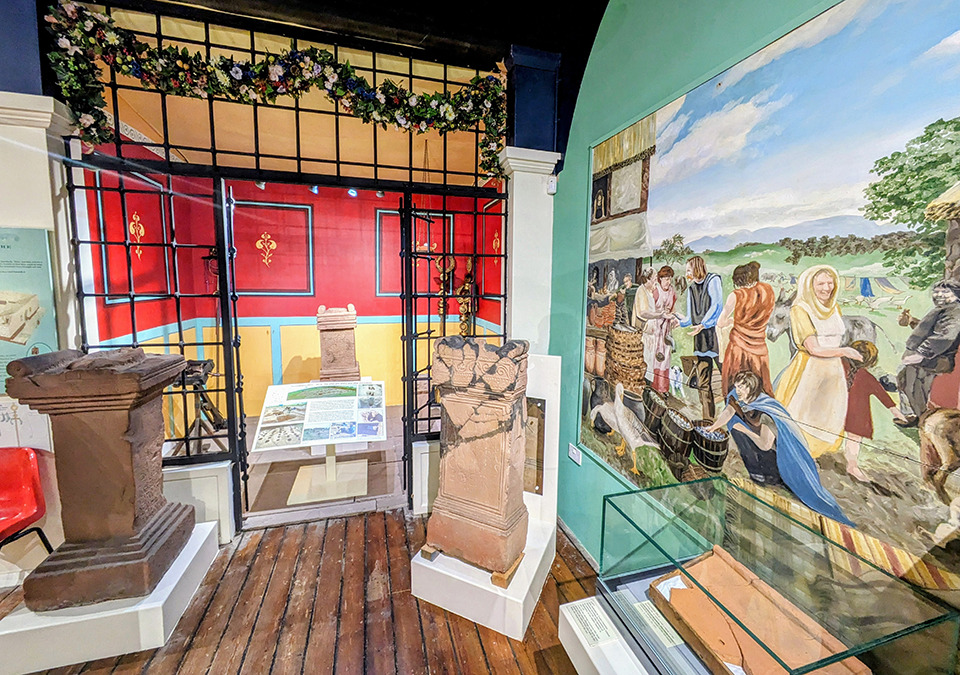
The site of the fort of Alauna has been owned by the Senhouse family since the 16th century, who were responsible for most of the excavations. These excavations include the impressive collection of Roman altars, which is the largest collection found on any site in Britain. The collection started with John Senhouse in 1570, he set the inscribed stones from the fort into the walls of his family home.
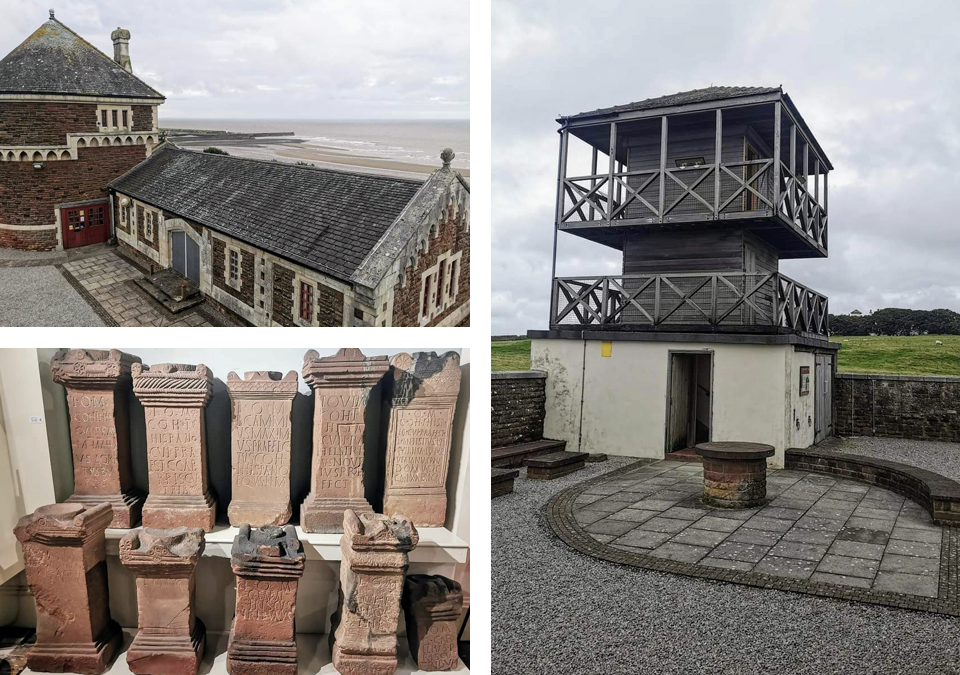
In the 18th century, Colonel Humphrey Senhouse used the stone from the fort to build the new town of Maryport. In 1870, the first Roman altars were found buried as part of foundations for a 4th/5th century building. The core of the collection is made up of 22 altars dedicated by commanders of the fort to Jupiter. Most of the altars were found buried in large pits.
The Senhouse mansion at Netherhall was abandoned in 1962 and the collection was moved to the former Royal Artillery Volunteer Drill Hall. This building was built in 1885 to train naval gunners. Known locally as The Battery, this is the current Senhouse Museum.
Although the altars are the main attraction of Senhouse, there is much more to the collection including the serpent stone, a serpent on a Celtic-style cross. It is believed that the serpent was intended to be a phallic symbol. Although only the outline of the fort can be seen now due to the extensive stone robbing, Senhouse offers stunning views of the Solway Coast from the replica watchtower as well as the brilliant museum.
Senhouse Roman Museum
The Battery, Sea Brows, Maryport, Cumbria CA15 6JD
For opening times see; www.senhousemuesum.co.uk
www.facebook.com/BordersCumbriaHistory
To learn more about what’s happening, follow Cumbria Guide on our social media
Share It: