Proposals revealed for a new major landmark artwork on the Lake District Coast
Proposals revealed for a new major landmark artwork on the Lake District Coast
Leading international artists and designers Olafur Eliasson, Rachel Whiteread, Roger Hiorns and Piet Oudolf have revealed proposals for a major landmark artwork on the Lake District Coast inspired by this lesser-known stretch of England’s rugged North West coastline.
Part of a new public art programme entitled Deep Time: Commissions for the Lake District Coast and commissioned by Copeland Borough Council, all the participants have spent time in Cumbria to develop plans for new large-scale permanent artworks that actively reflect aspects of its landscape, people and place.
The proposals will go on display as part of a free public exhibition opening at The Beacon Museum in Whitehaven (10 September – 9 October) and travelling onto Windermere Jetty Museum (20 October – 20 November). Visiting public will have the opportunity to study the proposals and leave comments for the judging panel who will then decide which artwork will receive core funding.
Olafur Eliasson with Robert Macfarlane
‘Your daylight destination’
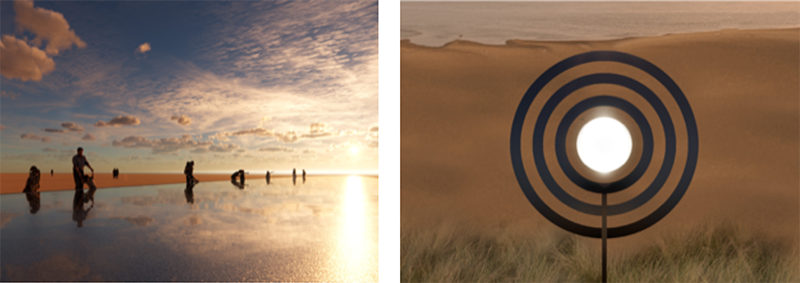
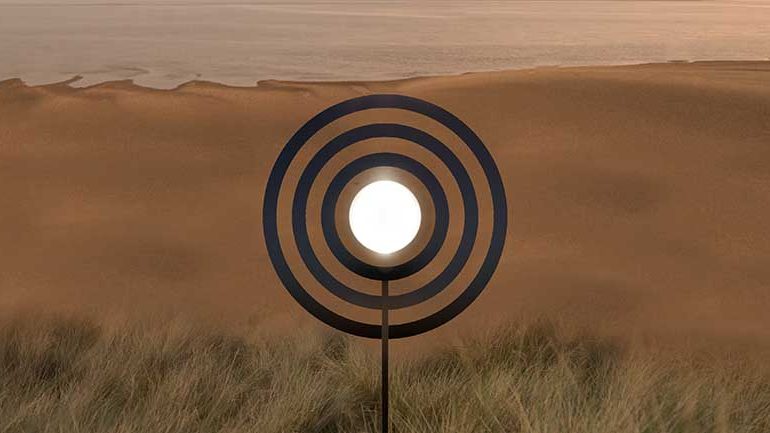
Image caption: Artistic rendering of ‘Your daylight destination’ an artwork by Olafur Eliasson in collaboration with Robert Macfarlane.
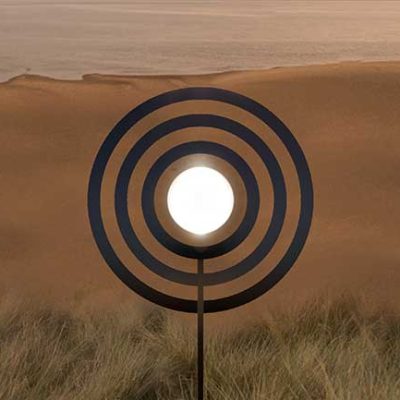
Icelandic–Danish artist Olafur Eliasson’s proposal ‘Your daylight destination’ unites earth, sky, and ocean in a monumental outdoor artwork and optical illusion in the tidal flats of Copeland. Devised with internationally best-selling author Robert Macfarlane and inspired by the ‘cup-and-ring’ form of prehistoric rock art found in the area, it centres around an elliptical steel basin that stretches out thirty metres into the mud flats of the intertidal zone. Twice a day, at high tide, the basin is submerged entirely, so that water is collected and remains in the basin once the tide has gone out again. The resulting pool acts like a mirror, reflecting the sky in its surface. Seen at a specific distance and angle from a purpose-built circular viewing platform that features a series of rings
mounted on stands, the rings appear in alignment as concentric circles that frame a perfectly circular ‘borrowed’ view of the sky surrounded by sand.
Rachel Whiteread
‘Drigg hut’
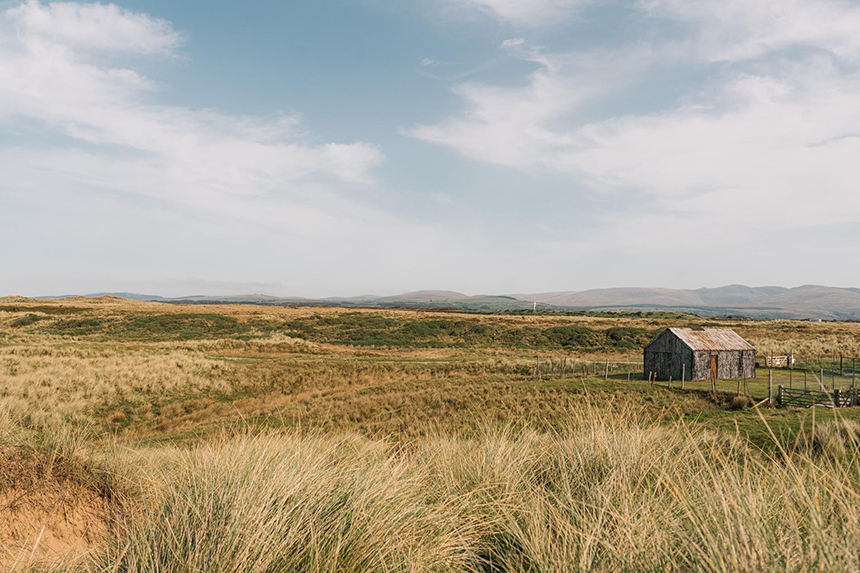
Image caption: Proposed site for Rachel Whiteread ‘Drigg hut’, Drigg. Photo: Sam Scales.
Turner Prize-winning British artist Rachel Whiteread’s proposal extends her practice of transforming everyday settings, objects, and surfaces into ghostly replicas that are eerily familiar. The proposed piece at Drigg, near Sellafield, responds to an abandoned, unassuming, corrugated building by casting an interior replica to create a concrete facsimile adjacent and parallel to the original. This eerie double presence, one very similar to the other, plays on the supposed temporary nature of the original structure, which will eventually disappear leaving only the facsimile as a quiet and secretive presence in the landscape and a navigational marker for seafarers.
Piet Oudolf with Thomas Piper, Nicolas Becker, Lex Bronze AI, vPPR Architects, Emanuele Coccia and AMI (Artist Moving Image)
‘SEED’
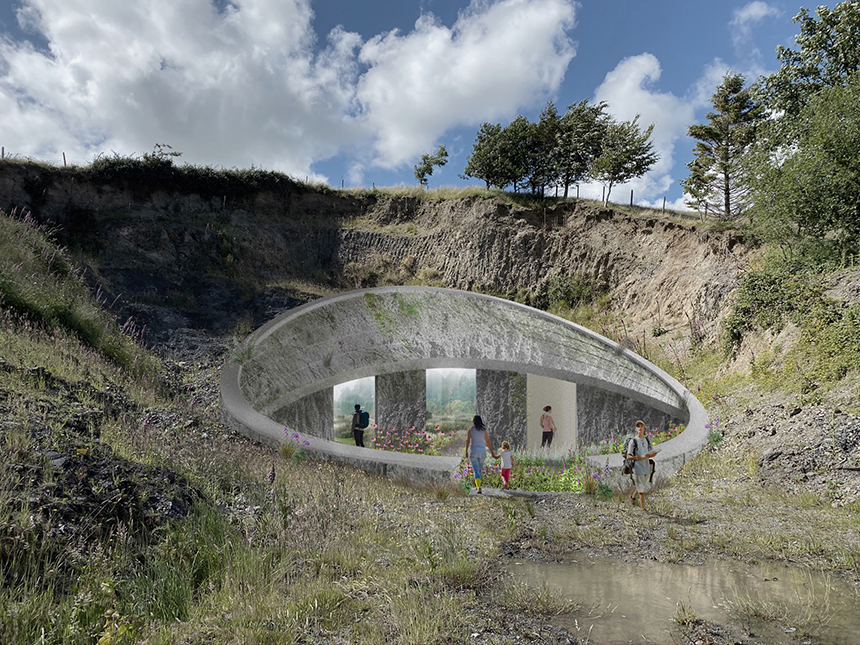
Image caption: Artistic rendering of ‘SEED’ by Piet Oudolf, Thomas Piper, Nicolas Becker, Lex Bronze AI, vPPR Architects, Emanuele Coccia and AMI (Artist Moving Image). Image: vPPR Architects.
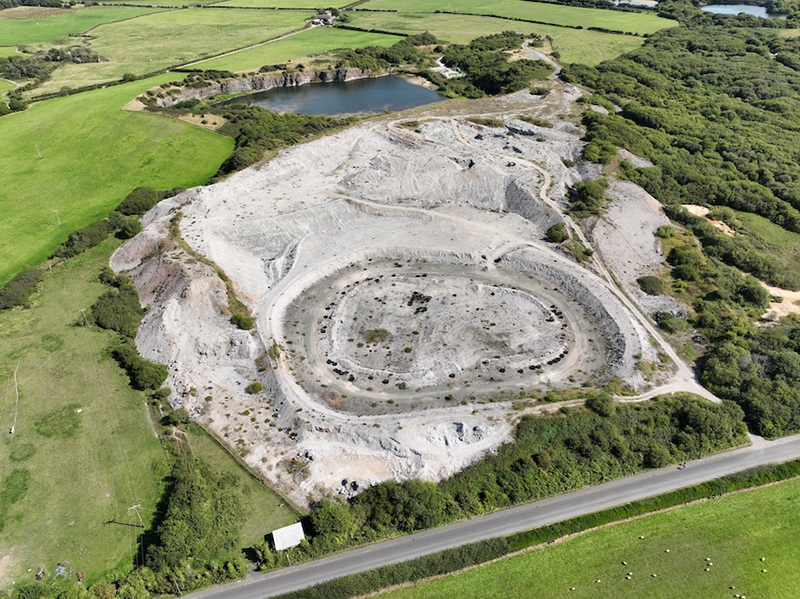
Dutch garden designer Piet Oudolf is the creative lead on an international collective including a philosopher, sound designer, AI artist and filmmaker, who together have proposed ‘SEED’, an immersive garden and AI experience which deconstructs a garden by isolating the underlying components – the sights, sounds and scents – and reconfiguring them within a new sunken pavilion on a disused quarry site. Designed by vPPR architects, the pavilion houses an immersive audio-visual installation featuring recordings of Oudolf’s responses to sites on the West Cumbria coast. An algorithm feeds into the audio and visual elements of the installation in an ever changing, seasonally fluctuating, and self-generative way. Within the pavilion, different interior spaces offer distinct acoustic qualities, leading onto an open courtyard garden designed by Oudolf as a microcosm of the area’s natural flora. The partially submerged pavilion references the area’s rich mining history, weaving in oral histories from locals and visitors.
Roger Hiorns with Tom Emerson (6a)
‘Millom land form’
Image caption: Proposed site for Roger Hiorns with Tom Emerson ‘Millom land form’, Millom, Copeland, 2022. Photo: Adamedia.
British artist Roger Hiorns has teamed up with Tom Emerson from 6a architects to consider the divided legacy of the iron industry on the West Cumbrian coast by proposing an artwork that transforms a slag heap at Millom into a precise sculptural form. Working solely with materials that already exist on the site, the process of transformation includes creating a vast new rectangular slope rising eastwards towards the nearby lake into which a grid of holes are drilled. Over time, the holes will self-seed and the artwork will soften and attune to its environment, turning this waste site into a landmark and climate register. The result is both a timeless form when seen at a distance, and an object hiding in plain sight that can be walked over by visitors.
Share It: