Cumbrian Coast: St Bees
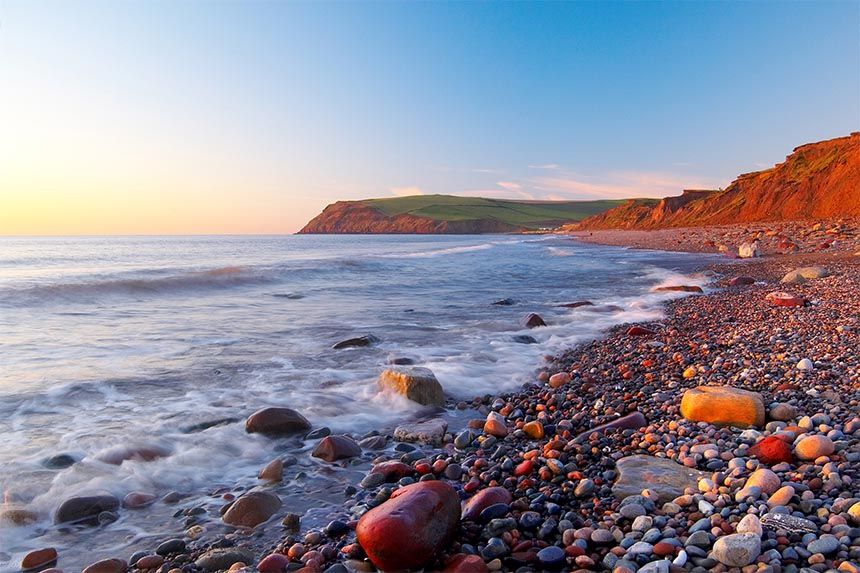
Paul McGuirk explores why this coastal resort is the Bee’s knees all year round.
As the starting point for Wainwright’s coast-to-coast walk, there’s a common misconception that if you’re heading away from St Bees it means that you must be going in the right direction. While this may be the case for those enjoying the view from St Bees Head before embarking on the trek towards Robin Hood’s Bay, it’s important to point out that there’s a lot going on inside this idyllic seaside village that is not to be overlooked. Regardless of how visually stunning it is from on high, there are any number of joys to be experienced by rambling downwards into the heart of one of Britain’s most historic settlements.
Traditional lore states that the village is named in reference to Saint Bega, an Irish princess who fled across the waters during the middle ages. Bega is said to have escaped an enforced marriage, before settling in the area to live a life of exemplary piety.
By the 10th century AD, the village was home to a priory of Benedictine monks. Although the priory was shut down under the orders of Henry VIII in 1539, this magnificent structure – complete with grandiose Norman doorway – still exists today.
Despite the dissolution of the monastery, the church continued to have a great influence on the growth of the area, with a theological college being founded in 1816, the first of its type in the UK outside of the educational confines of Oxford and Cambridge. From here, St Bees’ reputation as a place for scholars grew, and for decades the village was home to one of the finest boarding schools in the country, one which is set to re-open in the forthcoming academic year.
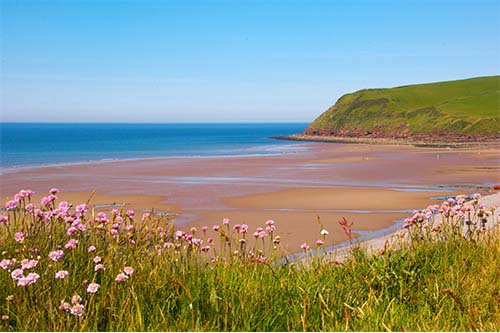
A family destination
As a coastal resort in proximity to the lakes, St Bees is perfectly situated for families who want to enjoy the sun, sea and sand of the coast without missing out on the opportunity to travel into the central Lake District.
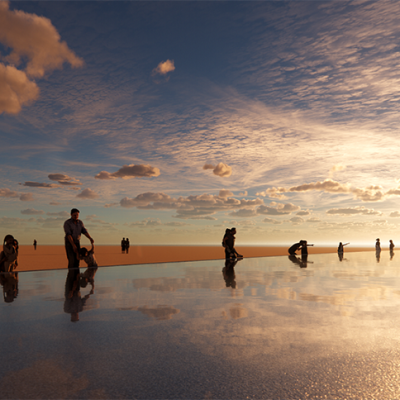
At low tide, the long sandy beach is a large expanse of rock pools and golden sands perfect for exploring, picnicking or simply relaxing upon, and this provides a great focal point for horse-riders, dog-walkers and beachcombers alike to unwind and while away the hours. With a local beach shop offering buckets, spades and Hartley’s famous ice cream, there’s plenty to keep the children occupied, too.
Food and entertainment
St Bees is home to a variety of gastro-pubs offering exemplary British cuisine in a quaint, traditional country setting. There are fewer simpler pleasures than enjoying some honest pub grub and a pint of local ale on a warm summer’s day in one of the village’s many beer gardens. Those who end up staying for one or two more can expect to be entertained by musicians long into the evening with crowd-pleasing singalongs among a jovial, homely atmosphere enjoyed by locals and visitors alike.
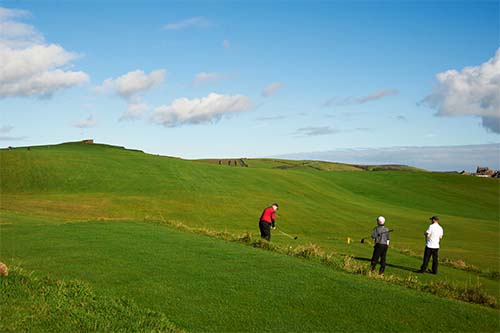
Keen golfers won’t want to miss out on a quick round at St Bees’ 9-Hole coastal course. Players begin inland before making their way towards the cliff-edge across holes of varying degrees of difficulty. Upon reaching the end of the course, players can reward themselves with refreshments in the clubhouse.
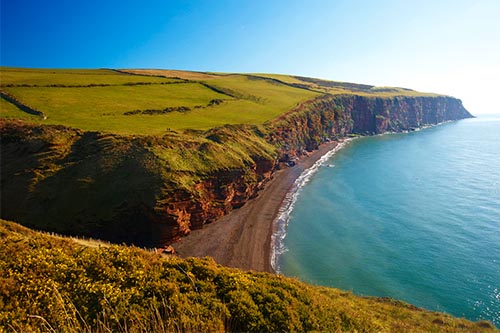
St Bees Head is undoubtedly one of the most dramatic natural formations in the North of England. This striking sandstone structure extends for four miles and offers unparalleled views of the Irish sea and the Isle of Man, which sits a mere forty miles away from the Cumbrian coast. The headland along the cliff edge is home to the only colony of Black Guillemots in England, and is accredited as an RSPB reserve.
A growing reputation
St Bees is perfect for day-trippers, long-weekenders and extended holidaymakers alike. It’s a beautiful coastal resort and deserves to be recognised as more than just the starting point for a walk. With so much on offer, visitors are implored to find out for themselves what this stunning village is all about.
Images Taken by Brian Sherwen
Share It: