Wildlife of the Solway Firth [85] The Common Mussel
Wildlife of The Solway Firth
The Common Mussel
Mytilus edulis
by Mark Vollers
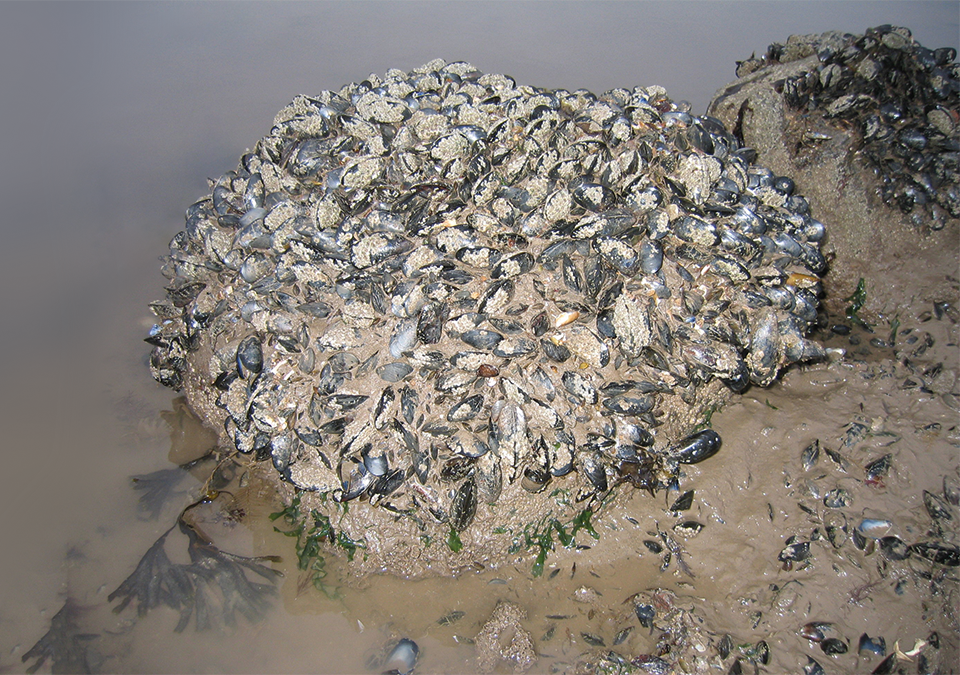
This distinctive blue bivalve shellfish is native to the North Atlantic and can be found all around the UK on intertidal areas that allow settlement and the Solway Firth is no exception.
Where there is not too much exposure to wave action, and rocky reef for them to attach to, they may reach sizes of 6-7cm and live for ten years or more. They attach themselves to rocks and often each other with tiny elasticated threads called byssus, which they can retract to allow reorientation and even a slow movement process.
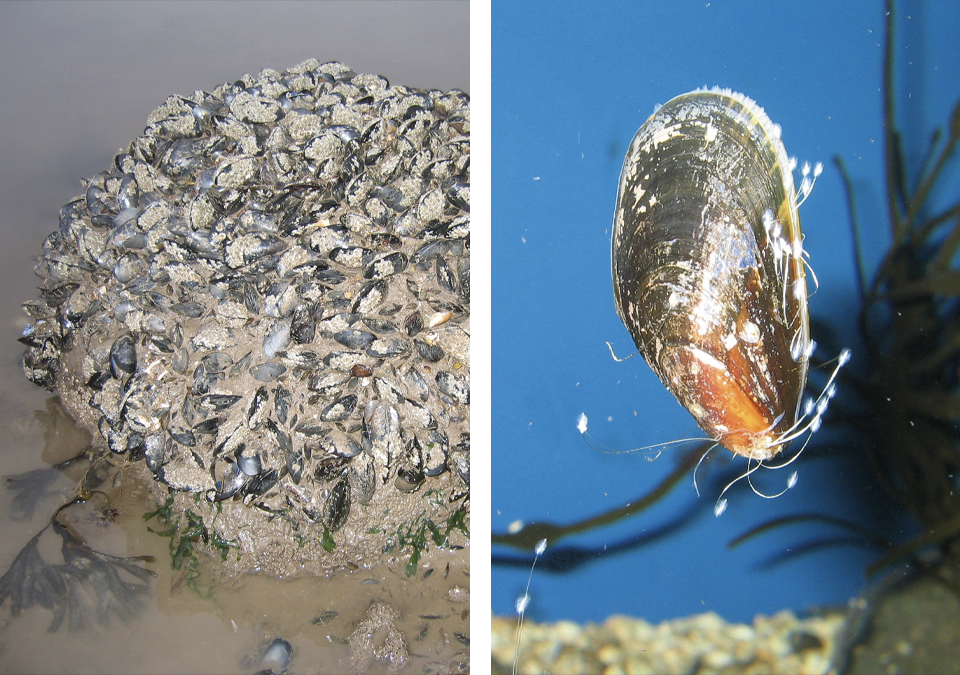
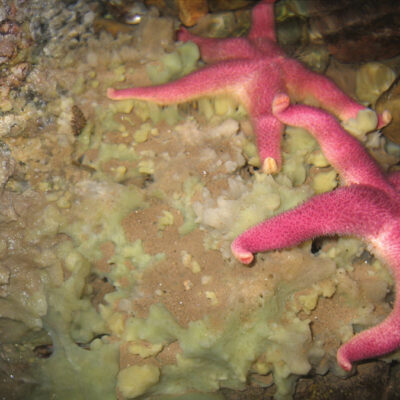
Breeding is a process where entire beds of mussels synchronise the release of countless millions of sperm and eggs resulting in free swimming larvae that re-stock existing beds and colonise new areas. However, only about 1% survive to adulthood, and even then, they are predated on by starfish, whelks, and of course humans. Mussels are a highly nutritious protein rich food and are farmed using hanging ropes, with the UK producing more than 10,000 tons a year for the market.
An adult mussel filters up to 25 litres of water an hour, extracting microscopic particulate matter and in so doing they provide a vital service in cleaning up murky water, reducing algal blooms and concentrating toxic substances. This latter ability means they can be collected and used as an indicator of water quality. Mussel beds also provide great shelter for other small invertebrates like crabs at the bottom of the food web.
Visit the Lake District Coast Aquarium facebook page to learn more about amazing wildlife on the Solway Coast.
www.facebook.com/maryport.aquarium
To learn more about what’s happening, follow Cumbria Guide on our social media
Share It: